

Puerto Rican Sancocho de Res is a delicious hearty stew made with tender beef, root vegetables and corn. A comforting, home-style dish served with a side of white rice you will make on repeat!
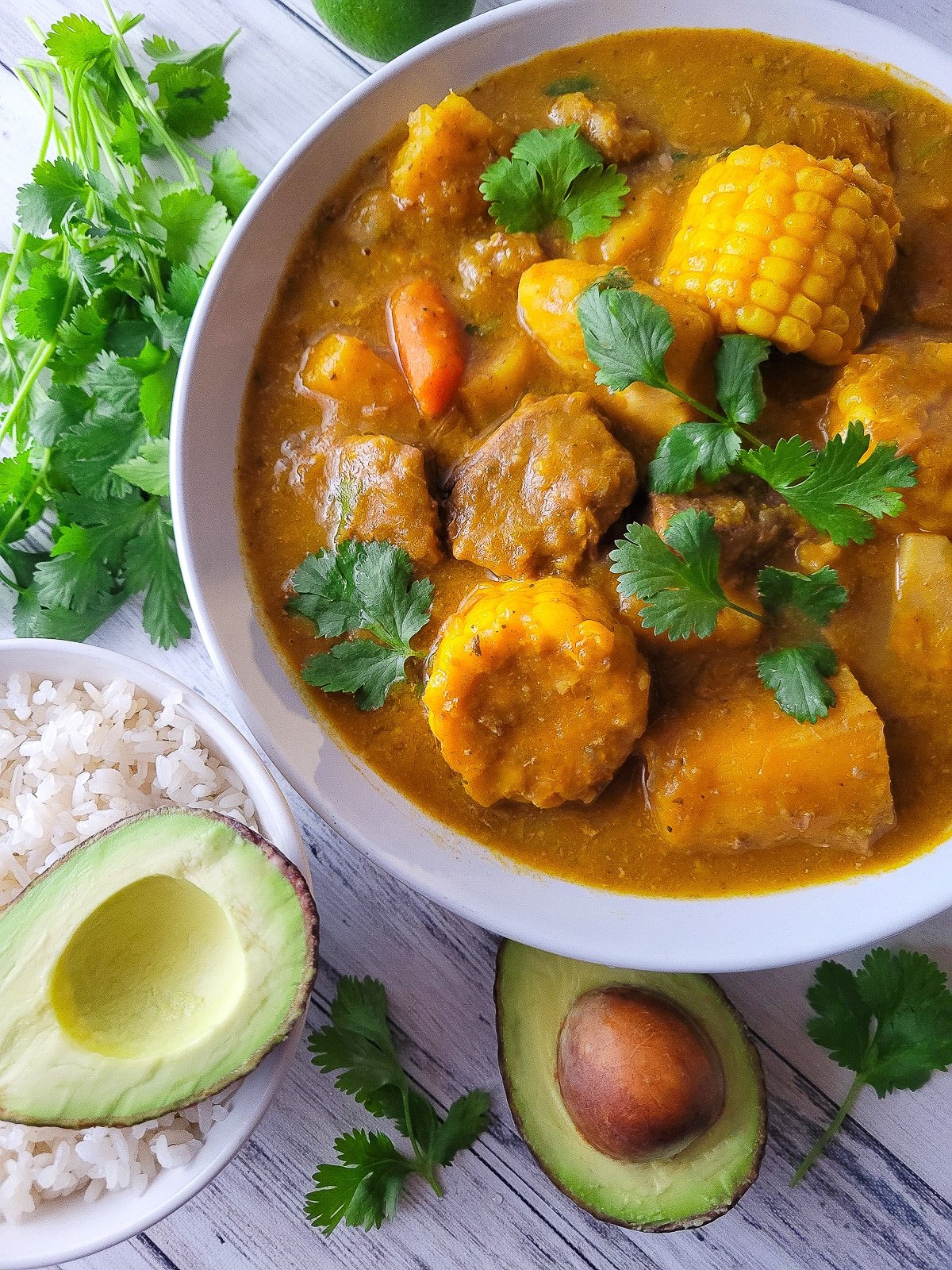
Sancocho de res or carne, as we say in Puerto Rico, is a dish that doesn't need an introduction in a Puerto Rican home. You smell its mouthwatering aroma long before you ever see it, and it always pulls everyone into the kitchen asking, "¿Ya está?" Made with tender beef, hearty root vegetables, a little achiote oil, and a deeply seasoned broth, sancocho puertorriqueño is comfort food in its purest form. It's a stew we make on rainy days, cooler days, or anytime we crave something comforting and hearty.
Jump to:
What is Puerto Rican Sancocho de Res (Sancocho de Carne)?
Puerto Rican beef sancocho is a hearty stew made with tender pieces of beef, root vegetables (viandas), and corn on the cob. It's sometimes confused with asopao, but once you've had both, you definitely know the difference. Asopao is rice-based, with the rice cooked right in the pot, which gives it a creamier texture. You'll find it made with chicken, beef, seafood, or gandules. Sancocho, though, gets its heartiness from the root vegetables instead of rice. In Puerto Rico, we serve sancocho with white rice on the side, not mixed in. If you're curious to try asopao, two versions we really love: asopao de camarones and asopao de gandules.
Ingredients
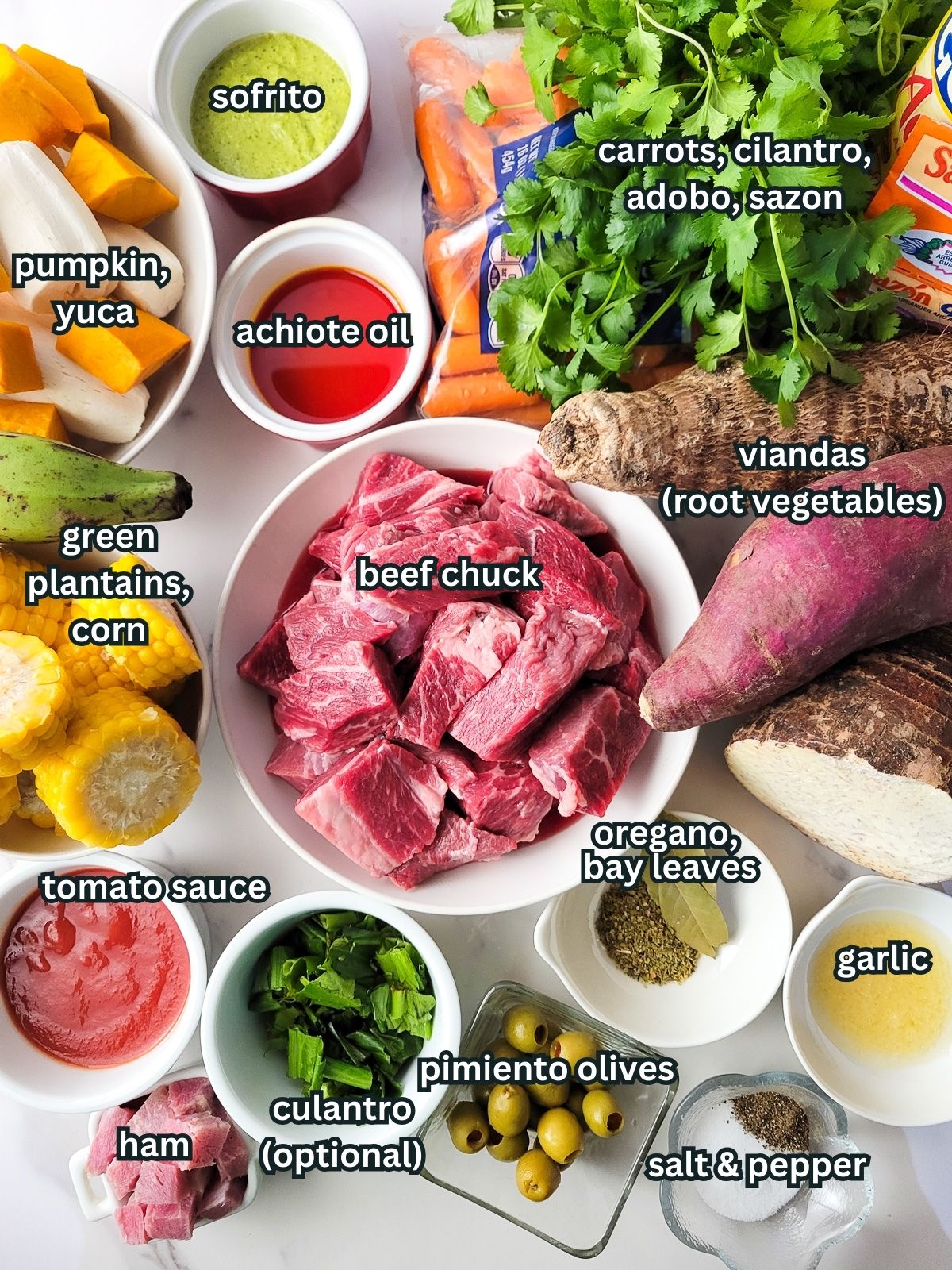
See my recipe card below for a complete list of the ingredients with measurements and instructions.
Instructions
Step 1: Cook the Beef
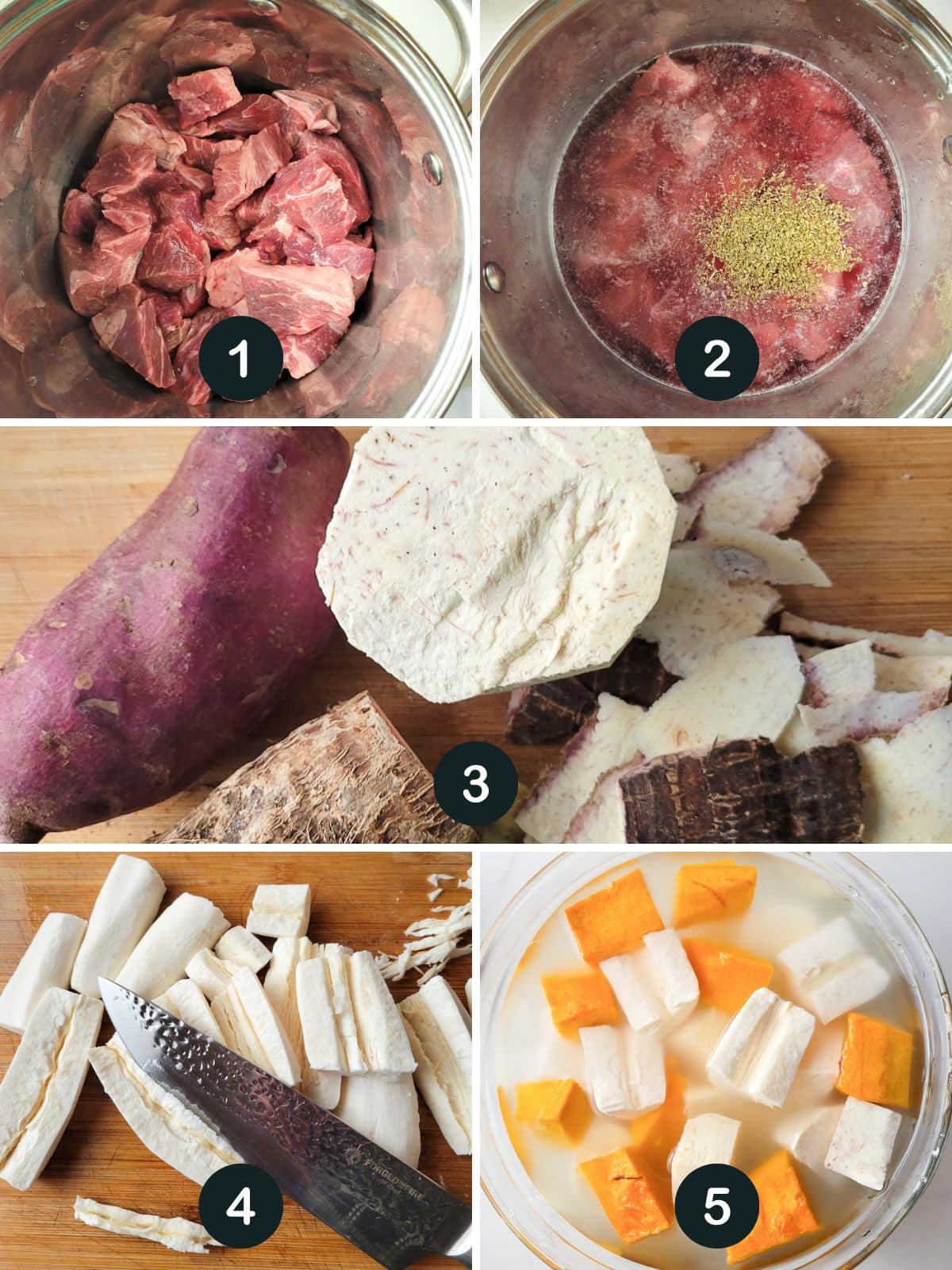
Cut the beef into 1½-inch pieces and season with adobo or salt and pepper to taste (Image 1). Add the beef to a large pot with enough water to fully cover it (about 5 cups), along with 1 teaspoon of salt and ½ tablespoon of oregano (Image 2). Cover the pot and cook over medium heat for about 1 hour, or until the beef is almost tender. Do not discard the broth.
Step 2: Prep the Root Vegetables
While the beef cooks, peel and cut the root vegetables (Image 3). If using yuca, be sure to remove and discard the fibrous membrane from the center, as it is tough and inedible (Image 4). Place the prepared vegetables in a bowl of water to prevent them from browning (Image 5). Set aside until ready to use.
Step 3: Sancocho Base
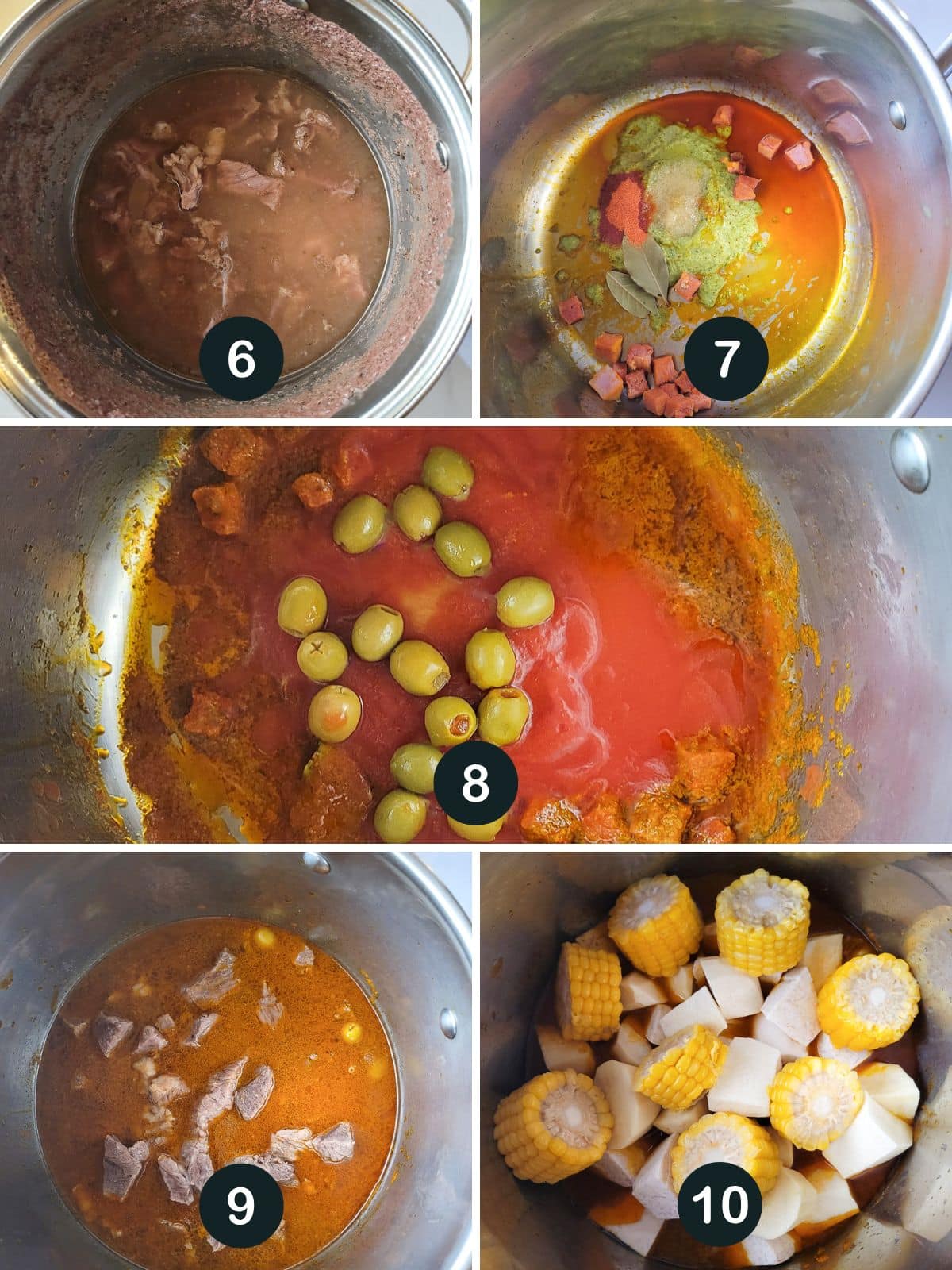
In a separate large pot, heat the achiote oil over medium heat. Add the ham and stir-fry for about 1 minute. Stir in the sofrito, garlic, bay leaves, ground pepper, sazón, tomato sauce, and olives. Cook for 2 minutes and then add the beef broth or water (Images 6-9).
Step 4: Combine and Simmer
Add the cooked beef along with its broth to the pot. Stir to combine and season with salt to taste.
Add the root vegetables, including the corn and carrots (Image 10). Do not add the yuca and pumpkin yet. Cook for 15-20 minutes.
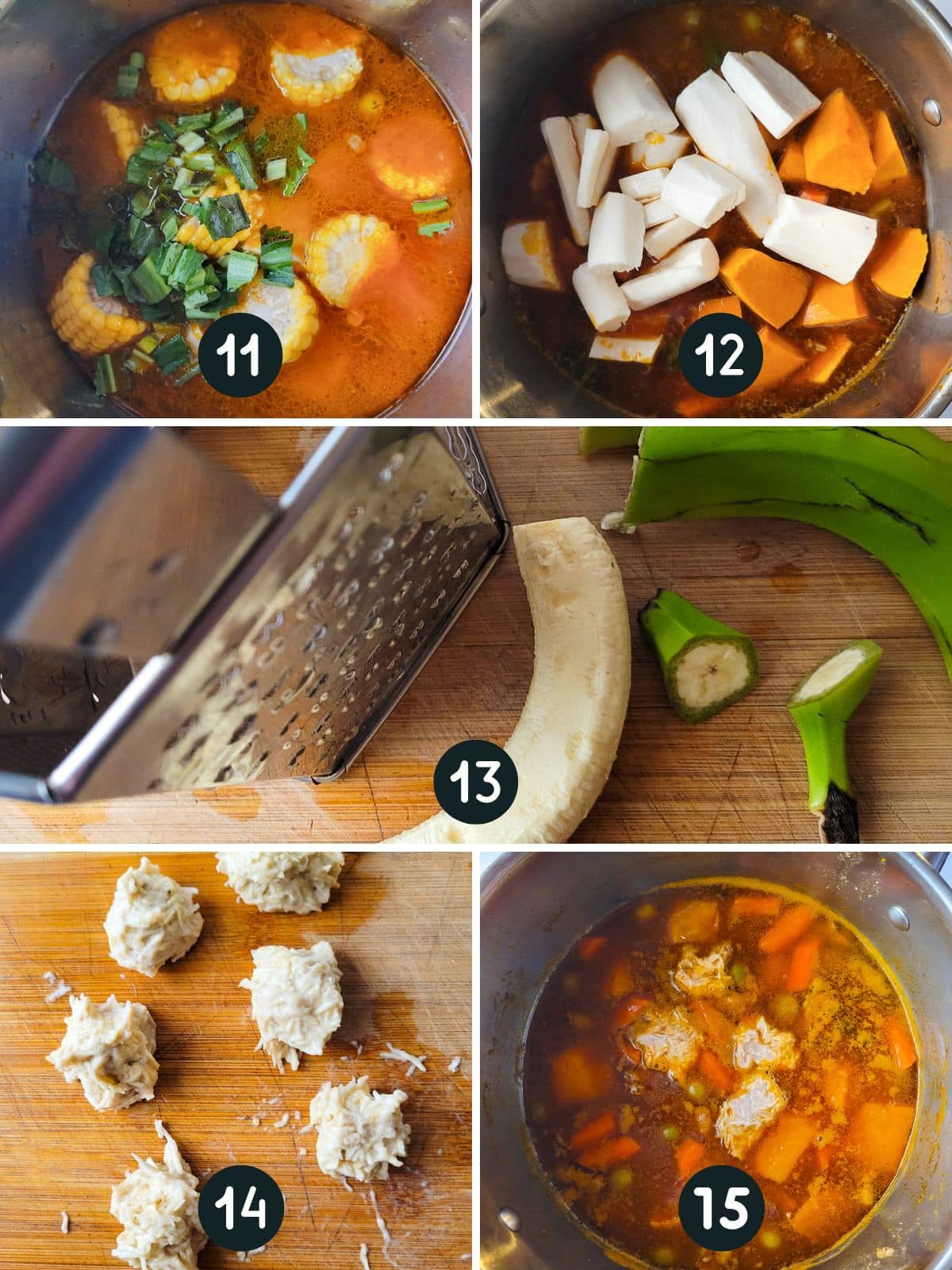
After 15-20 minutes, add the culantro (if using), cilantro, plus the yuca and pumpkin (Images 11 &12). Continue cooking while you prepare the plantain dumplings.
Step 5: Prepare the Plantain Dumplings
Grate the green plantains using the finest side of a grater. Season with salt to taste. The mixture will be very loose, this is normal. Using your hands or a teaspoon, gently form small, loose dumplings and drop them directly into the stew. Cook for 15-20 minutes (Images 13-15).
Step 6: Finish and Serve
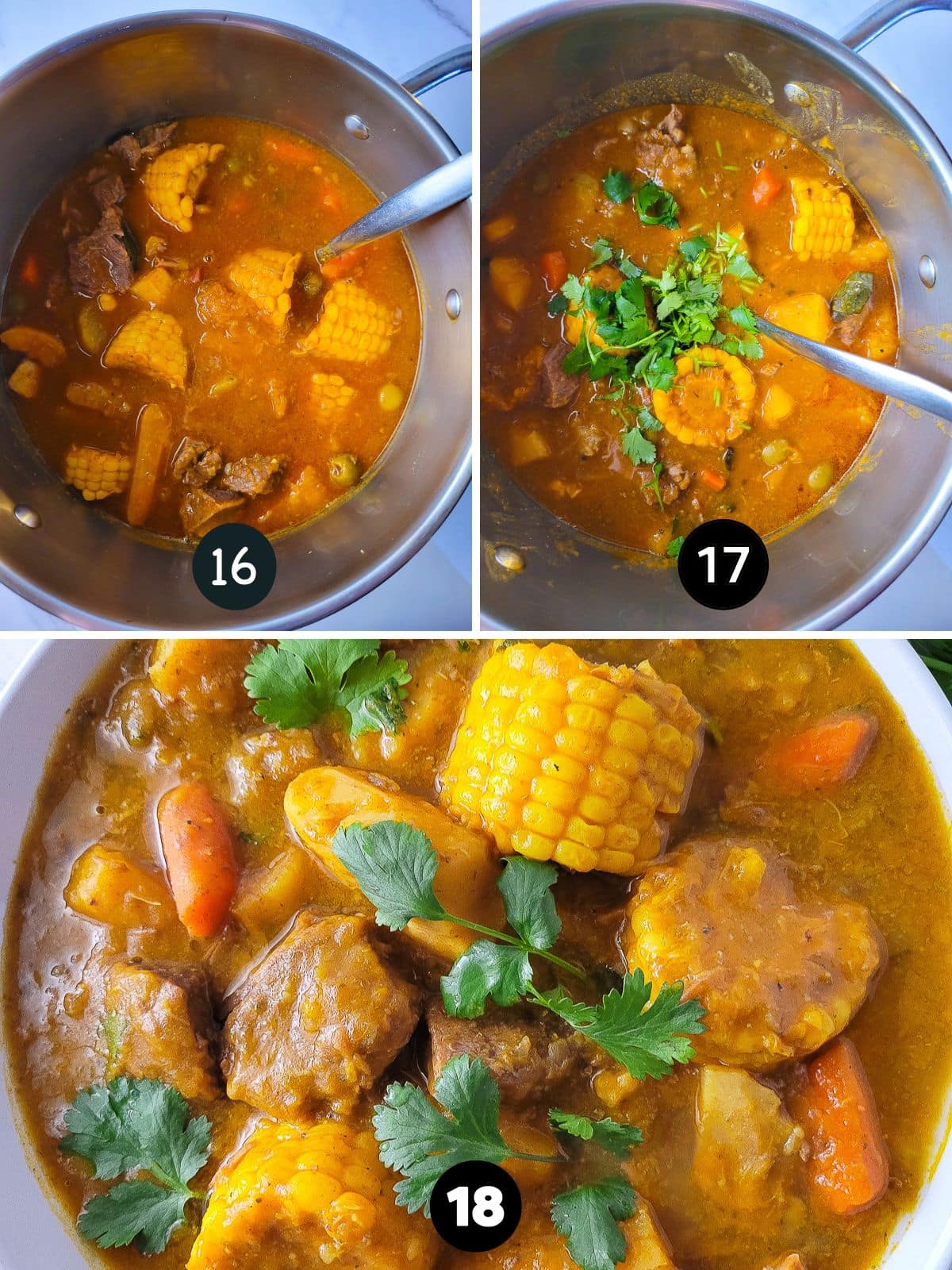
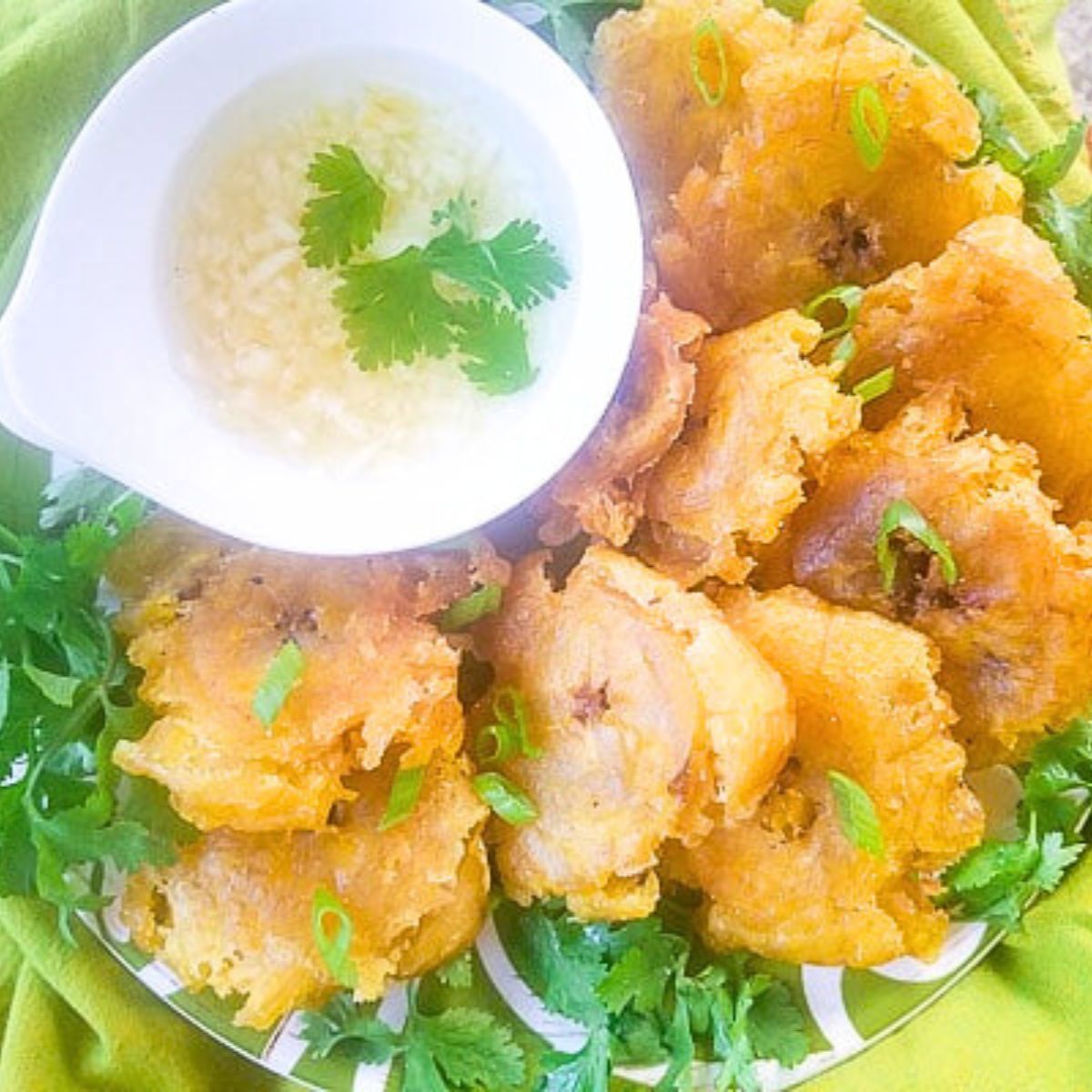
Stir in the fresh cilantro and taste for seasoning. Once the dumplings are cooked through, the sancocho is ready. Top with additional cilantro (Images 16-18). Serve hot with a side of arroz blanco (Puerto Rican white rice), tostones and avocado.
Cathy’s Expert Tips for Puerto Rican Sancocho
- Beef. If the beef is not fork-tender, cook it a little longer.
- Stew. The root vegetables and plantain dumplings will naturally give the stew a thicker consistency. Sancocho should be rustic and hearty.
- Remove the yuca center. Whether you’re using fresh or frozen yuca, always remove the fibrous center and discard. It doesn't soften as it cooks and is unpleasant to chew.
- Add the vegetables in stages. Root vegetables cook at different speeds. Adding them later helps prevent them from falling apart and keeps the stew chunky and rustic.
- Broth. If the sancocho is too thick for your liking, simply add a little more water or broth until you reach your desired consistency.
- Taste at the end. The stew changes as everything simmers together. Always taste and adjust salt near the end of cooking, be careful not to add too much salt in the beginning.
Recipe FAQ’s
Yes. Beef chuck is ideal, but beef shank, short ribs and oxtail are also a common choice. Just keep in mind that certain cuts of meat need a longer time to become tender.
Sancocho is meant to be on the thicker side and hearty. The consistency comes from the root vegetables and plantain dumplings, not from thickening agents.
Absolutely. Puerto Rican Sancocho tastes even better the next day once the flavors have had time to meld. Reheat gently over the stove, adding a little water or broth if needed.
Yes, it will keep well in the freezer for up to 3 months.
If you can't find culantro, you can use solely cilantro.
Other Puerto Rican Soups You Will Love


Did you try this recipe? Please leave a ⭐ review below!
Click any of the images in the post to PIN this Recipe and don't forget to follow along on Pinterest and Facebook.
📖 Recipe

Puerto Rican Sancocho de Res
Ingredients
Beef
- 2½ pounds beef chuck cut into 1½-inch chunks
- adobo seasoning sprinkled or season with salt and pepper to taste
- 1 teaspoon salt
- ½ tablespoon oregano
- 5 cups water
Sancocho Base
- 1 pound ham steak cut into ½ inch pieces
- 4 ounces tomato sauce
- 3 tablespoons sofrito
- ½ teaspoon ground black pepper
- 2 packets sazon with annatto
- 1 tablespoon garlic paste or 2 tablespoons garlic puree
- 2 bay leaves
- ½ cup fresh cilantro rinsed and coarsely chopped plus more for topping
- 3 tablespoons achiote oil or vegetable oil
- 3 tablespoons pimiento stuffed olives
- 3-4 culantro leaves (optional) rinsed and chopped
- 8 cups beef broth or water more as needed
Root Vegetables
- 1 pound yuca (cassava) use fresh or frozen, peeled and cut into 2-inch chunks
- ½ pound malanga coco (big taro root) peeled and cut into 2-inch chunks
- 1-2 medium yautía (hairy taro root) peeled and cut into 1½-inch chunks
- 1 pound calabaza (kabocha pumpkin) peeled and cut into 1½-inch chunks
- 1 medium batata (boniato) peeled and cut into 1½-inch chunks
- 1 pound carrots peeled and cut into 1½-inch pieces
- 2 ears corn cut into 2-inch thick pieces
Dumplings
- 1-2 plantains peeled and grated
Instructions
Cook the Beef
- Cut the beef into 1½-inch pieces and season with adobo or salt and pepper to taste. Add the beef to a large pot with enough water to fully cover it (about 5 cups), along with 1 teaspoon of salt and ½ tablespoon of oregano. Cover the pot and cook over medium heat for about 1 hour, or until the beef is almost tender. Do not discard the broth.
Prep the Root Vegetables
- While the beef cooks, peel and cut the root vegetables. If using yuca, be sure to remove and discard the fibrous membrane from the center, as it is tough and inedible. Place the prepared vegetables in a bowl of water to prevent them from browning. Set aside until ready to use.
Prepare the Sancocho Base
- In a separate large pot, heat the achiote oil over medium heat. Add the ham and stir-fry for about 1 minute. Stir in the sofrito, garlic, bay leaves, ground pepper, sazón, tomato sauce, and olives. Cook for 2 minutes and then add the beef broth or water.
Make the Sancocho
- Add the cooked beef along with its broth to the pot. Stir to combine and season with salt to taste.
- Add the root vegetables, including the corn and carrots. Do not add the yuca and pumpkin yet. Cook for 15-20 minutes.
- After 15-20 minutes, add the culantro (if using), plus the yuca and pumpkin. Continue cooking while you prepare the plantain dumplings.
Prepare the Plantain Dumplings
- Grate the green plantains using the finest side of a grater. Season it with salt to taste. (The mixture will be very loose, this is normal.) Using your hands or a teaspoon, gently form small, loose dumplings and drop them directly into the stew. Cook for 15-20 minutes.
Finish and Serve
- Stir in the fresh cilantro and taste for seasoning. Once the dumplings are cooked through, the sancocho is ready. Top with additional cilantro. Serve hot with a side of arroz blanco (Puerto Rican white rice), tostones and avocado.



Angel Rivera says
Delicioso!!!
Catherine Arena says
¡Gracias Angel!