

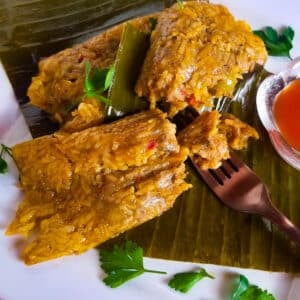
Love traditional Puerto Rican Pasteles? Then you will love these Pasteles de Arroz (Rice Pasteles)! These are just so delicious and the flavor will remind you so much of traditional Puerto Rican Pasteles! Perfect for the holidays!
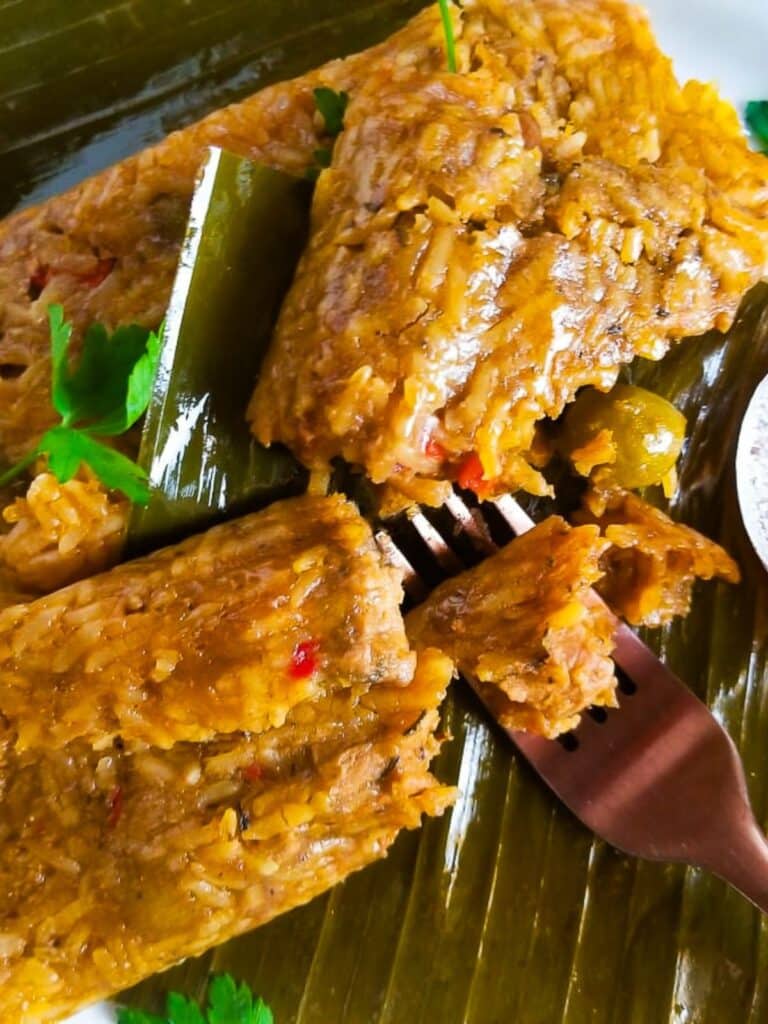
Just like mofongo, arroz con gandules and pernil are quinessential dishes in Puerto Rico, so are pasteles de masa (pasteles de guineo). However, depending where you live, it can be difficult to find the green bananas and root vegetables needed to make the masa for traditional pasteles. This is where pasteles de arroz are perfect. They taste a lot like regular pasteles, delicious, simpler to make and you will have no problems finding all the ingredients you will need.
Jump to:
What are Pasteles de Arroz?
Pasteles de arroz, also known as “pastelitos de arroz,” are Puerto Rican pasteles that originated in Corozal and traditionally are smaller than regular pasteles. They are made with seasoned rice that is mixed with grated or pureed plantain to create a “masa.” There are households that leave the plantain out completely and make them with just rice. Adding the plantain gives them a flavor and texture that is much closer to authentic “Puerto Rican pasteles,” while the rice only version tastes more like an arroz con carne rice dish. They are most commonly filled with a stewed pork filling or carne para pasteles but you can also use carne de pollo or chicken filling. The pasteles are then wrapped in banana leaves, tied and boiled.
Ingredients
Meat Filling
- pork shoulder
- sofrito
- garlic cloves
- garlic powder
- oregano
- cumin
- sazon with annatto
- salt to taste
- tomato sauce
- vinegar
- cilantro
- annatto oil (achiote oil)
- olives
- garbanzo beans
- roasted pimiento peppers
Masa
- green plantains
- medium or long grain rice
- hot sauce and ketchup for serving
See my recipe card below for a complete list of the ingredients with measurements.
Instructions
Make the Pork Filling
Season pork. Add the pork to a mixing bowl and sprinkle the pork pieces with adobo and garlic powder.
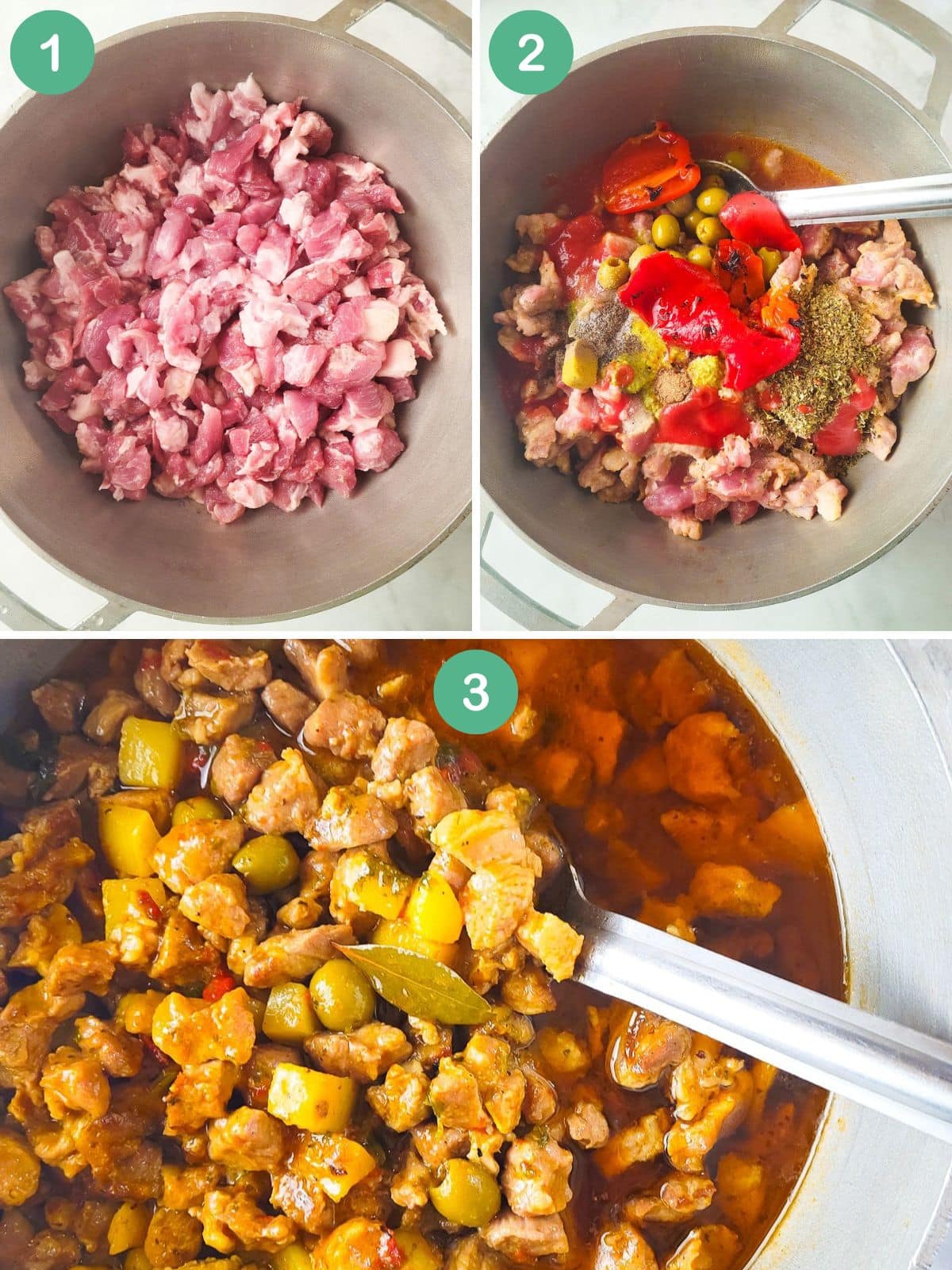
Oil. In a caldero or other large pot, add the achiote oil and heat over medium heat. Add the pork, stir and cook for a few minutes (image 1).
Add all seasonings. Add the seasonings, olives, garbanzo beans, tomato sauce, pimiento peppers and the water (image 2). Stir, cover the pot partially with lid and cook for 40 minutes (stirring again in between cooking).
Cilantro. After 40 minutes, add in the cilantro, cook for an additional 20 minutes or until the pork is fork tender and saucy (image 3). Set aside until ready to use.
Prepare the Rice and Plantain Masa
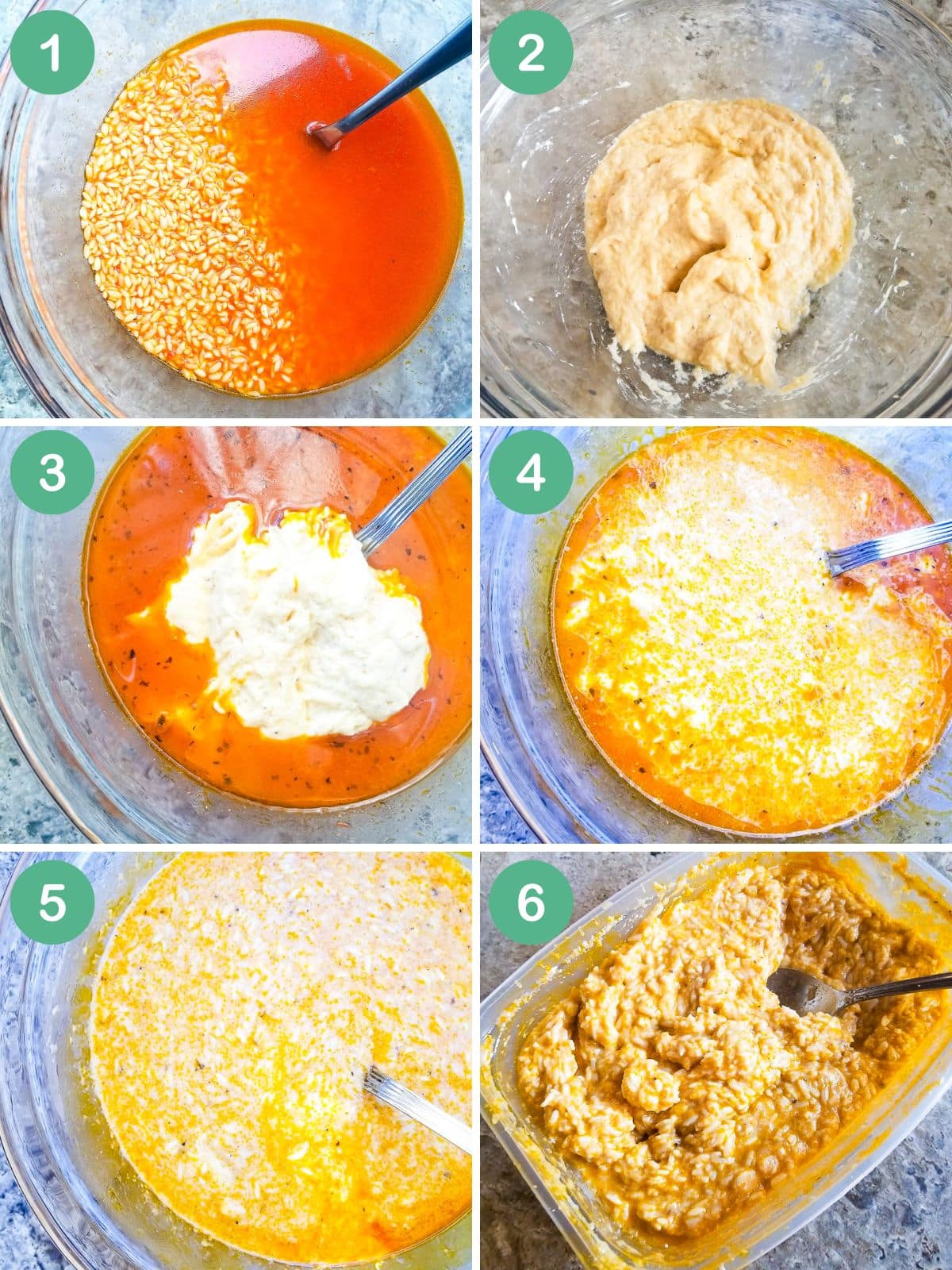
Rice. Using a colander, rinse the rice under cool water until the water runs clear. Add the rice to a bowl and presoak for 2 hours. After 2 hours, add 2 tablespoons of achiote oil and stir (image 1). The oil will color the rice.
Grate plantains. Using a grater, grate plantains using the finest side to puree (image 2).
After the rice has soaked, drain the water. Add 1½ cups of broth from the stewed pork and stir. Add the grated plantain puree (image 3 and 4) and stir it into rice. Allow the rice to continue soaking until you’re ready to use (image 5). Note: Your rice plantain masa will be somewhat thick (image 6).
Preparing the Plantain Leaves
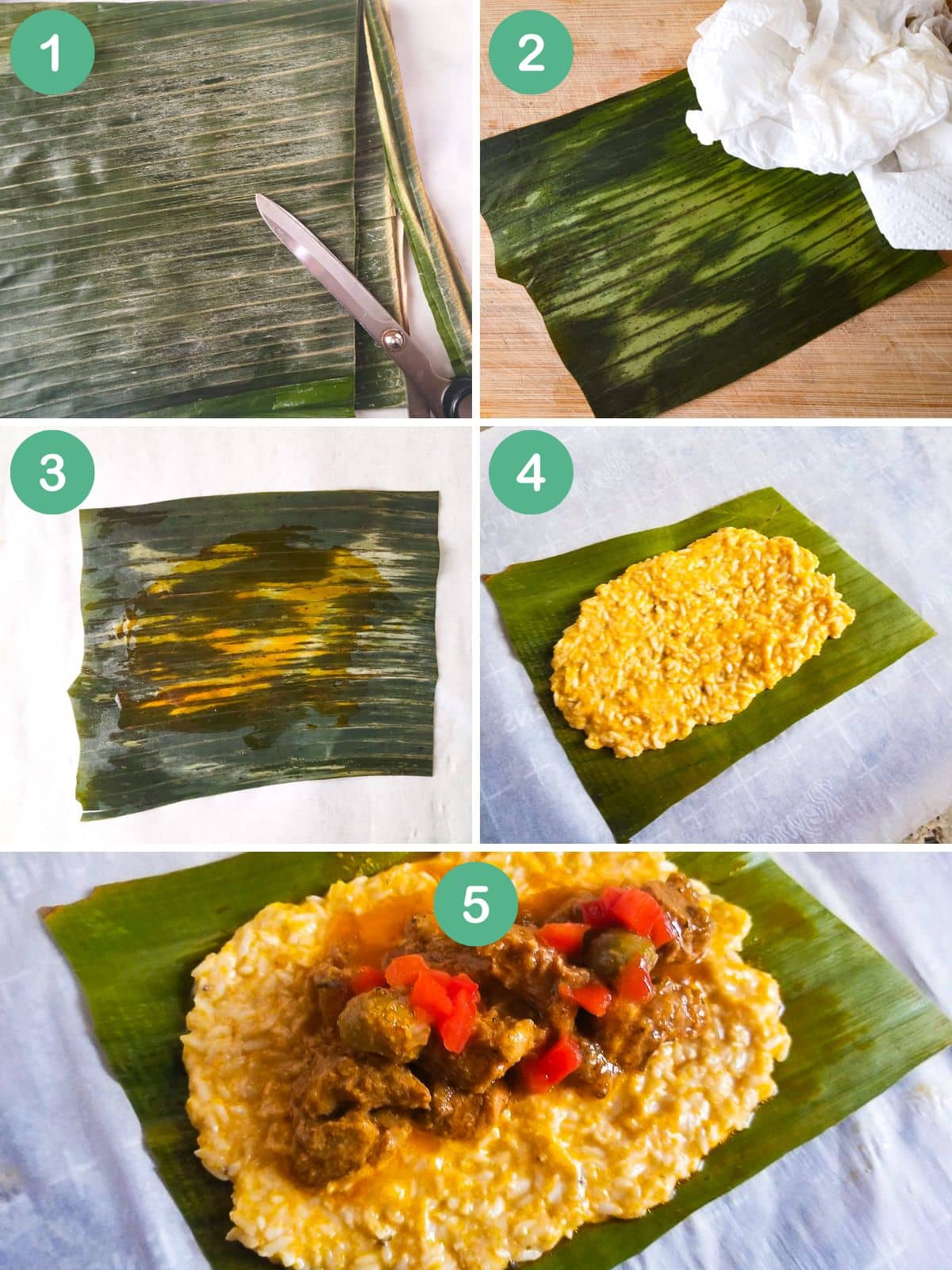
Cut plantain leaves. Remove plantain leaves from package and cut 30 pieces into 6×8 inch pieces. Using scissors, cut the rough rib (image 1) off.
Clean leaves. Rinse the leaves under warm water. Wipe both sides of the leaves with a clean damp kitchen towel or paper towels (image 2).
Wilt leaves. Turn on your stove to low heat. Take one leaf at a time and pass leaf over burner on both sides to wilt and make the leaves more manageable. Set aside.
Butchers Twine. Cut 30 pieces of twine. Each piece measuring about 3 feet.
Assembling. Lay one sheet of pasteles paper on a flat surface and then place a banana leaf in the center. Spread a teaspoon of the achiote oil or a teaspoon of the pork broth to the center of the leaf (image 3).
Masa and filling. Scoop ½ cup of the masa onto the center of the banana leaf and spread lengthwise. Add 2 to 3 tablespoons of the pork filling. Top the meat with additional olives and pimiento strips (images 4 and 5).
Wrapping the Pasteles de Arroz
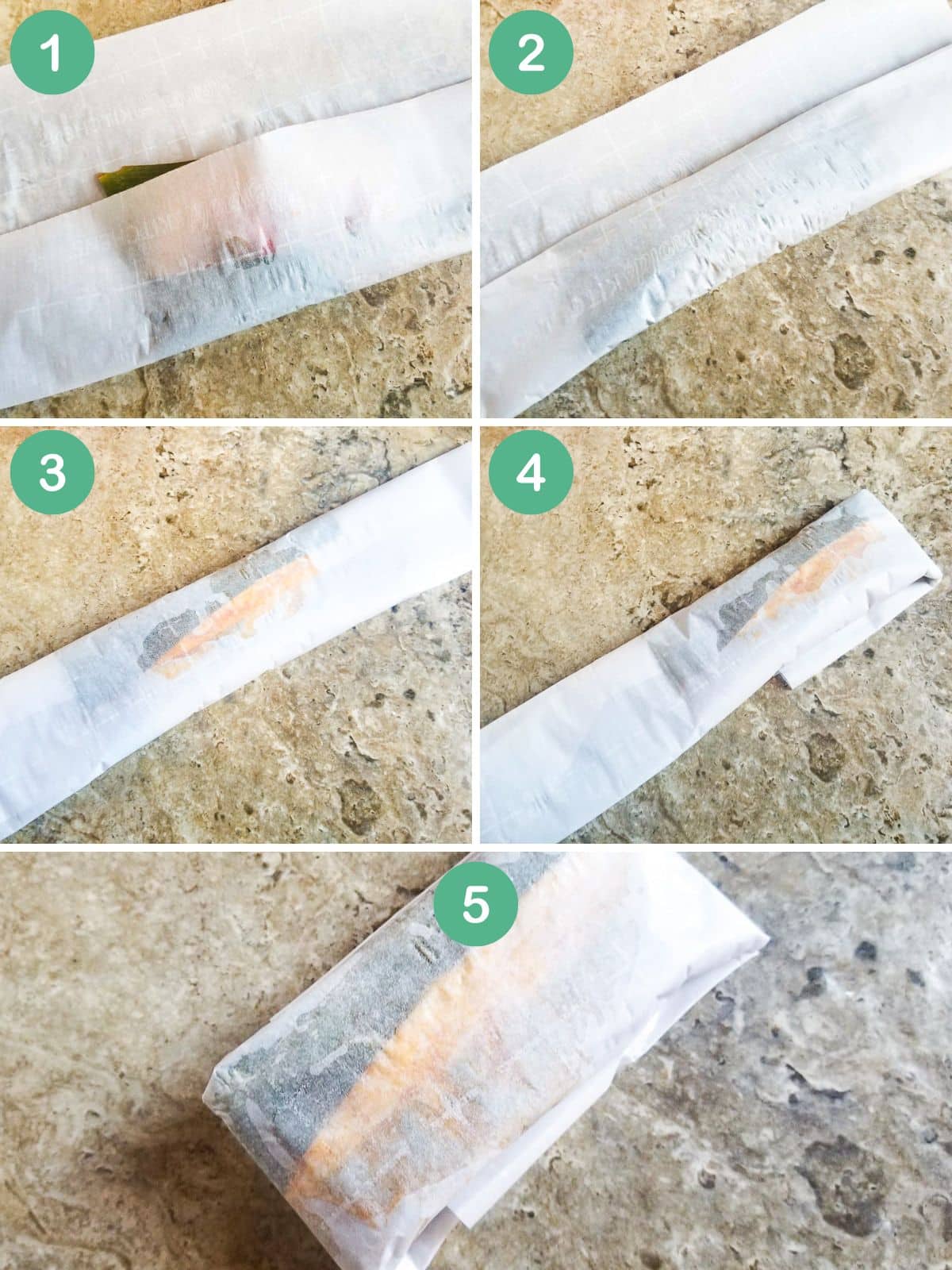
Bring paper over mixture and continue rolling over to fully enclose mixture snugly (images 1, 2 and 3).
Fold one side of paper underneath pastel and repeat procedure with the other end (images 4 and 5). Repeat the entire process and make the other pasteles.
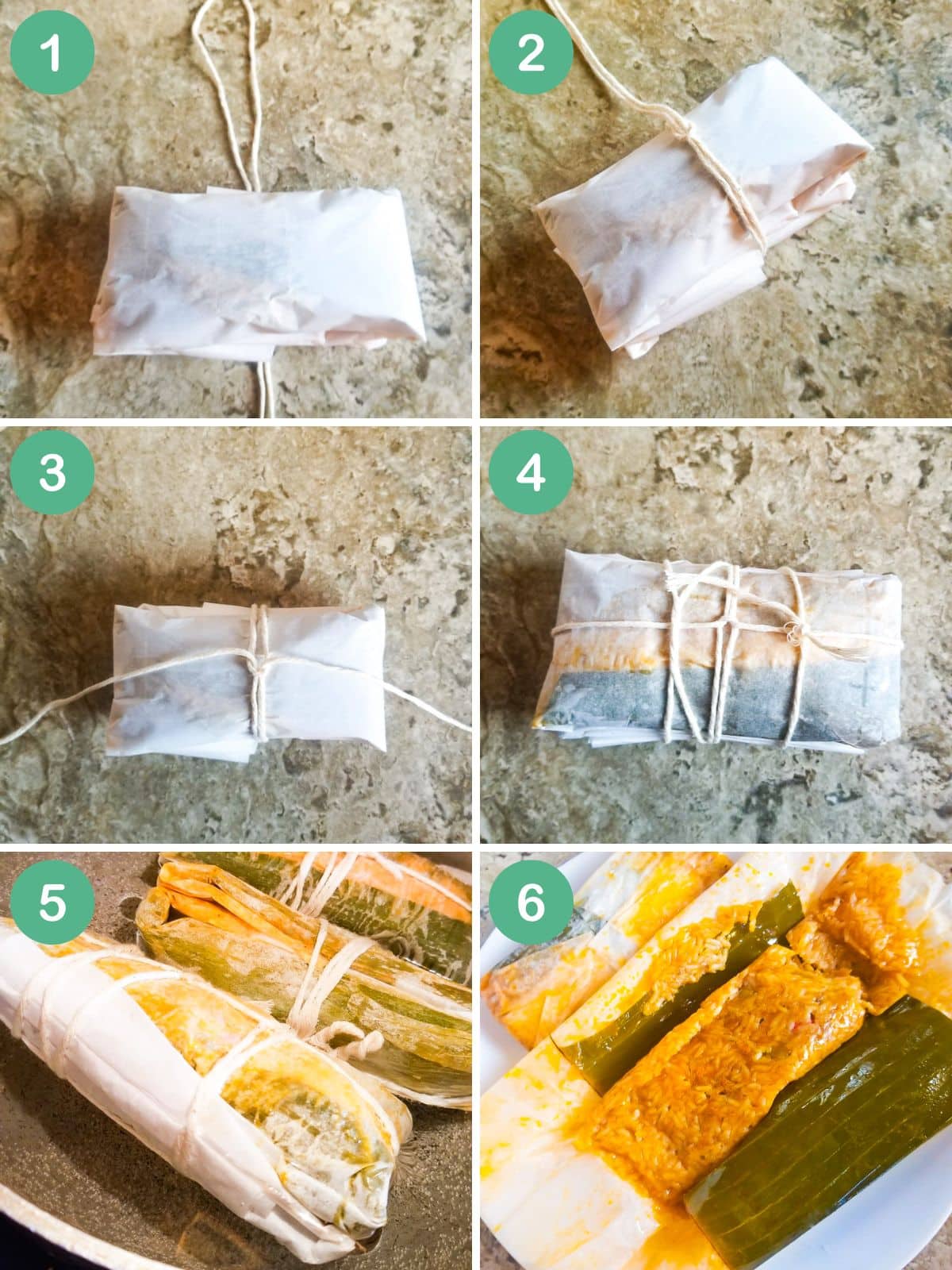
Once you have all the pasteles formed and wrapped, proceed to stack them into bundles and tie.
Stack two pasteles on top of each other with the folded (tucked) ends touching each other to create a bundle, (known as a yunta).
Fold twine in half and place underneath pastel to form a hoop. String twine through center of hoop in twine and snug pastel (images 1 and 2).
Bring the ends over to other sides of pastel and go underneath pastel with twine (image 3). Flip pastel over and repeat procedure again (image 4).
- Finally tie a knot to keep pasteles secure and snug.
Note: Do not squeeze pasteles with twine too much as when they cook, the rice will swell up and needs space to fluff.
Cook or freeze. At this point you can either cook pasteles right away or you can freeze them.
Cook. In a medium to large pot, over medium high heat, add enough water to cover pasteles.
Salt water. Add about a teaspoon of salt to water. Cover pot and cook for a minimum 1½-2 hours.
Serving. When pasteles are cooked, use tongs or a fork to remove pastel bundles from water allowing excess water to drain from pasteles.
Place on a plate. Using scissors, cut twine. Open ends of paper and roll pastel out (image 5). Discard paper and either serve pastel on top of plantain leaf or discard as well. Serve pasteles with a side of hot sauce and ketchup. Enjoy!
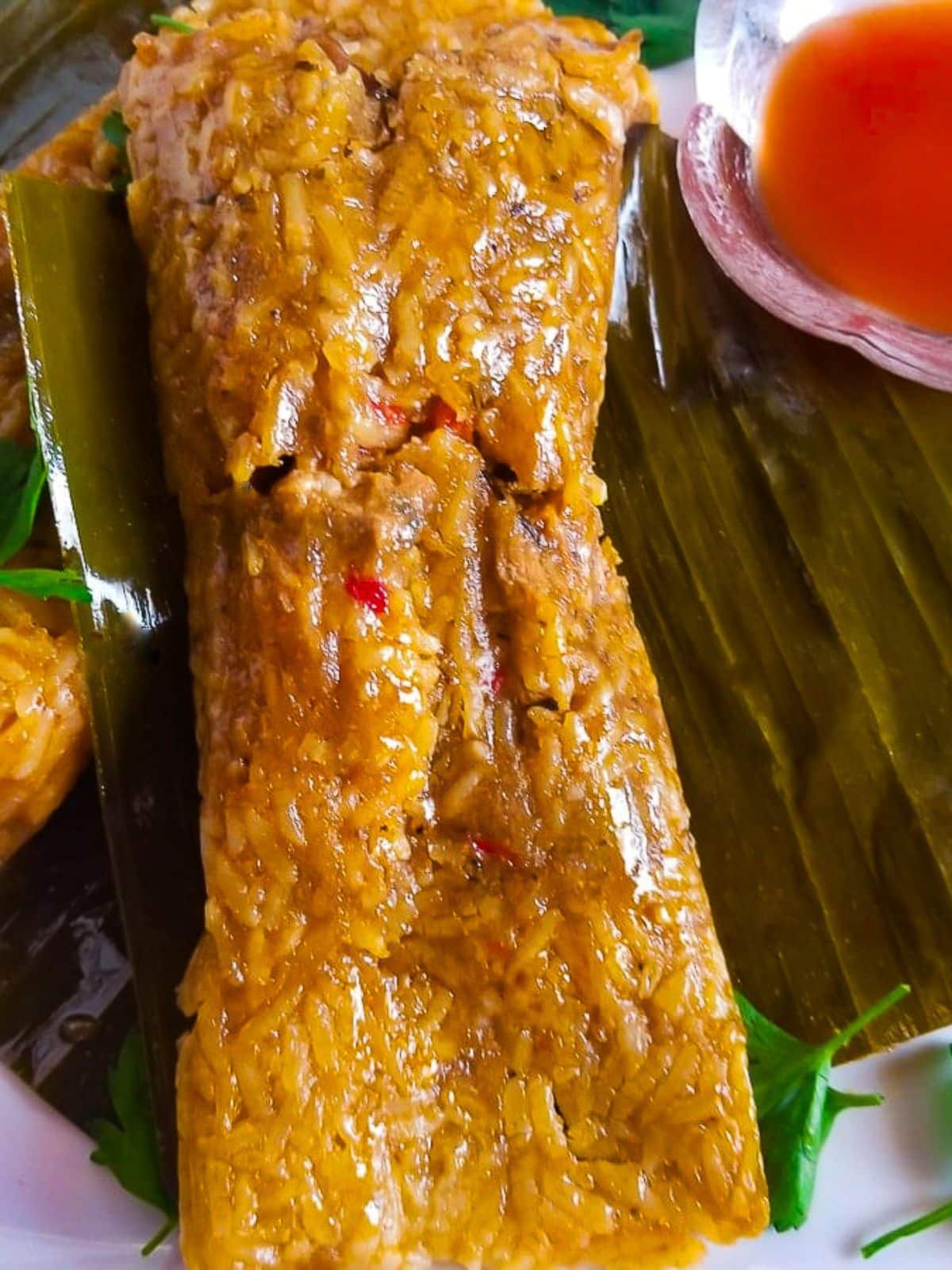
Serving Suggestions
Pasteles de arroz can be enjoyed on their own but they’re also delicious served with a few simple Puerto Rican sides or holiday dishes.
Sides
- ensalada de coditos (macaroni salad)
- ensalada de coditos con jamon (macaroni salad with ham)
- ensalada de papa (potato salad)
- ensalada de granos (green bean salad)
Meats
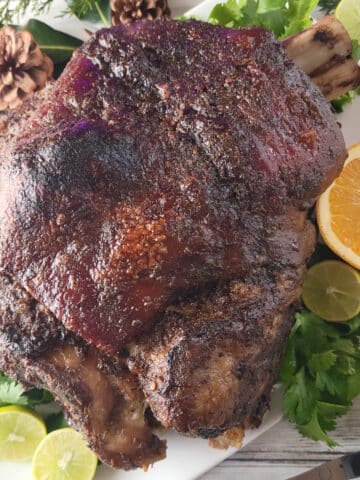
- pernil asado (roasted pork shoulder)
- jamon glaseado (glazed ham)
- jamon al horno con piña (pineapple ham)
- carne frita (fried pork chunks)
How to Store Pasteles de Arroz
Once all the pasteles are assembled, you can freeze them until you're ready to cook them. If you plan on eating them within the next few days or weeks, you can simply stack them in the freezer.
For longer storage, I like placing them in large gallon freezer bags or freezer-safe containers to keep them better protected in the freezer. Properly stored, pasteles de arroz can last in the freezer for up to 6 months.
How to Cook Frozen Pasteles de Arroz
Place however many pasteles you want to cook into a large pot and add enough water to fully cover them. Add about 1 teaspoon of salt to the water, cover the pot, and cook over medium-high heat for about 1½ hours.
Recipe FAQ’s
Not exactly. Traditional Puerto Rican pasteles are usually made with a masa made from green bananas and root vegetables, while pasteles de arroz use seasoned rice as the base.
No. Some households make them with plantain puree mixed into the rice, while others make them with only rice. The plantain version tastes more similar to traditional pasteles.
Yes. Chicken filling works really well in pasteles de arroz and is very commonly used.
Absolutely. They freeze very well and can be stored in the freezer for up to 6 months. Perfect for having them prepped ready for the holidays.
No. Pasteles de arroz are boiled straight from frozen.
This usually happens if the masa is too loose, the pasteles were overfilled, or they were not wrapped tightly enough before boiling.
Frozen pasteles de arroz usually take about 1½ hours to fully cook in boiling water.
Other Puerto Rican Holiday Dishes You Will Love

Did you try this recipe? Please leave a ⭐ review below!
Click any of the images in the post to PIN this Recipe and don't forget to follow along on Pinterest and Facebook.
📖 Recipe
Pasteles de Arroz (Rice Pasteles)
Ingredients
Pork Filling
- 3 pounds pork shoulder, boston butt, or boneless ribs rinsed and cut into ½ inch cubes
- 3 tablespoons Puerto Rican sofrito
- 6 cloves garlic mashed and chopped
- 1 tablespoon garlic powder
- ½ tablespoon oregano
- ½ tablespoon cumin
- 1 packet sazon with annatto found in Latin section of supermarket
- ⅓ cup tomato sauce
- salt to taste
- 2 cups water
- ½ cup vinegar
- handful fresh cilantro rinse and coarsely chopped
- 2 tablespoons annatto oil/achiote oil
- 3 tablespoons pimiento stuffed olives optional
- ⅓ cup garbanzo beans optional
- 3 tablespoons roasted pimiento peppers optional
Rice Plantain Masa
- 2 cups medium or long grain rice rinsed
- 1½-2 green plantains peeled and grated
- 2 tablespoons annatto oil/achiote oil
- 1½ cups broth from stewed pork
Other Ingredients
- hot sauce and ketchup for serving
Materials Needed
- 1 package fresh or frozen plantain leaves
- pasteles paper or parchment paper
- twine
- grater
Instructions
Pork Filling
- Season pork. Add the pork to a mixing bowl and sprinkle the pork pieces with adobo and garlic powder.
- Oil. In a caldero or other large pot, add the achiote oil and heat over medium heat. Add the pork, stir and cook for a few minutes.
- Add all seasonings. Add the seasonings, olives, garbanzo beans, tomato sauce, pimiento peppers and 2 cups of water. Stir, cover the pot partially with lid and cook for 40 minutes (stirring again in between cooking).
- Cilantro. After 40 minutes, add in the cilantro, cook for an additional 20 minutes or until the pork is fork tender and saucy. Taste for seasoning, add additional salt if needed. Set aside until ready to use.
Rice and Plantain Masa
- Rice. Using a colander, rinse the rice under cool water until the water runs clear. Add the rice to a bowl and presoak for 2 hours. After 2 hours, add 2 tablespoons of achiote oil and stir. The oil will color the rice.
- Grate plantains. Using a grater, grate plantains using the finest side to puree plantain.
- Drain. After the rice has soaked, drain the water. Add 1½ cups of broth from the stewed pork and stir. Add the grated plantain puree and stir it into rice. Allow the rice to continue soaking until you're ready to use. Note: Your rice plantain masa will be somewhat thick.
Prepare Plantain Leaves
- Cut plantain leaves. Remove plantain leaves from package and cut 30 pieces into 6×8 inch pieces. Using scissors, cut the rough rib off.Clean leaves. Rinse the leaves under warm water. Wipe both sides of the leaves with a clean damp kitchen towel or paper towels. Wilt leaves. Turn on your stove to low heat. Take one leaf at a time and pass leaf over burner on both sides to wilt and make the leaves more manageable. Set aside.
Butchers Twine
- Cut 30 pieces of twine. Each piece measuring about 3 feet.
Assembling
- Set up your station: rice, pork filling, paper, plantain leaves and twine side by side.
- Assembling. Lay one sheet of pasteles paper on a flat surface and then place a banana leaf in the center. Spread a teaspoon of the achiote oil or a teaspoon of the pork broth to the center of the leaf.Masa and filling. Scoop ½ cup of the masa onto the center of the banana leaf and spread lengthwise. Add 2 to 3 tablespoons of the pork filling. Top the meat with additional olives and pimiento strips.
Wrapping the Pasteles
- Bring the paper and plantain leaf over mixture and continue rolling over to fully enclose mixture snugly.Fold one side of paper underneath pastel and repeat procedure with the other end. Repeat the entire process again and make the other pasteles.
Stack into Bundles
- Once you have all the pasteles formed and wrapped, proceed to stack them into bundles and tie.Stack two pasteles on top of each other with the folded (tucked) ends touching each other to create a bundle.
- Fold twine in half and place underneath pastel to form a hoop. String twine through center of hoop in twine and snug pastel.Bring the ends over to other sides of pastel and go underneath pastel with twine. Flip pastel over and repeat procedure again.Note: Do not squeeze pasteles with twine too much as when they cook, the rice will swell up and needs space to fluff.Finally tie a knot to keep pasteles secure and snug.
Cook or Freeze
- Cook or freeze. At this point you can either cook the pasteles right away or you can freeze them for later.
To Cook
- Cook. In a medium to large pot, over medium high heat, add enough water to cover pasteles. Bring to a boil. Salt water. Add the amount of pasteles you want to have and add about a teaspoon of salt to water. Lower heat to medium and cover the pot with a lid. Cook for a minimum 1½-2 hours.
Serving
- Serving. When pasteles are cooked, use tongs or a fork to remove pastel bundles from water allowing excess water to drain from pasteles.
- Place on a plate. Using scissors, cut twine. Open ends of paper and roll pastel out. Discard paper and either serve pastel on top of plantain leaf or discard.


Join the Discussion